
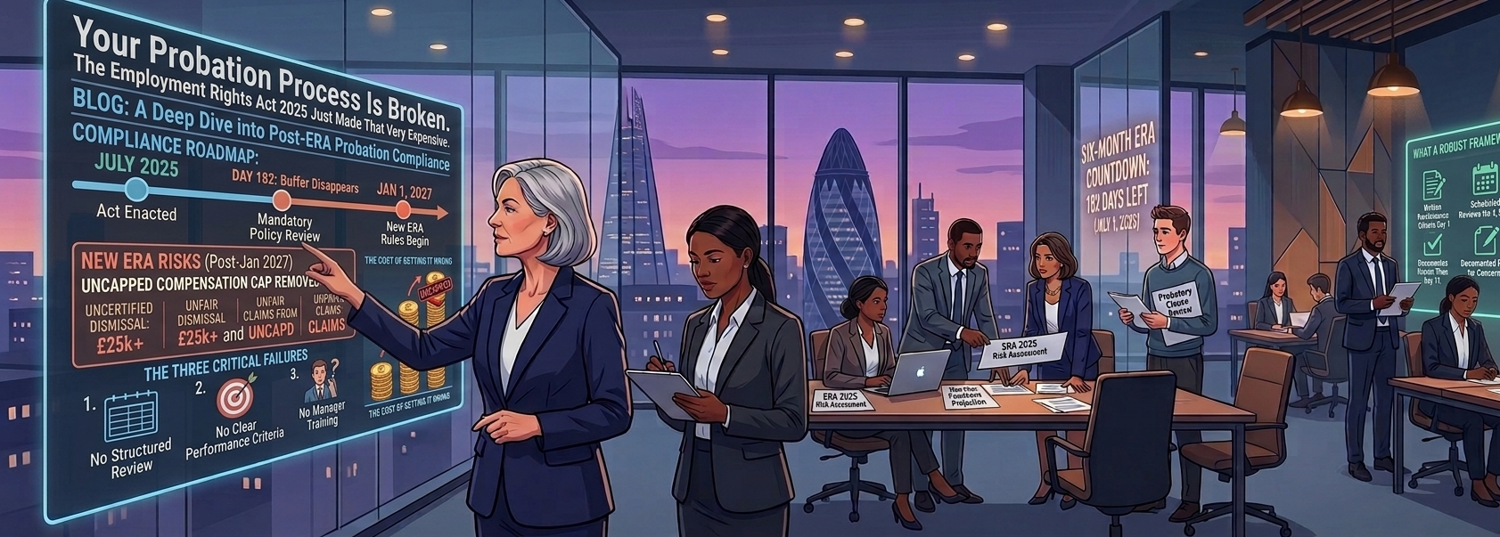
Most SMEs run probation on autopilot. A short review at three months, a vague sign-off, and on we go. From January 2027, that approach is no longer just ineffective. It is a legal and financial risk.
The Probation Illusion
Ask most business owners whether their probation process works, and they will say yes. Ask them to describe it, and you will usually hear something like: “Six months, a check-in around month three, and if there are no obvious issues we confirm them in post.”
That might have felt sufficient when the unfair dismissal qualifying period was two years. You had time. A poor hire could be managed out with relative ease in the first year without significant legal risk.
From 1 January 2027, that buffer disappears.
What Changes — and When
Under the Employment Rights Act 2025, the unfair dismissal qualifying period reduces from two years to six months. From that date, any employee you dismiss after six months of continuous service will have the right to claim unfair dismissal at tribunal.
Crucially, the compensation cap is also being removed. A poorly-managed dismissal that previously might have cost a few thousand pounds in settlement could, post-January 2027, result in an uncapped award.
Your probation period does not extend beyond Day 182. Everything that matters needs to happen before that.
The Three Probation Failures That Will Cost You
1. No Structured Review Schedule
Informal check-ins are not enough. Probation reviews need to be scheduled, documented, and signed off. If a dismissal reaches tribunal and you cannot evidence a clear performance trail, the process will be viewed as unfair by default.
2. No Clear Performance Criteria
If your employee did not know what success looked like in their role, how can you fairly assess whether they met it? Performance standards need to be set at the outset and documented in the offer or onboarding process.
3. No Manager Training
Your line managers are the ones running these reviews. If they are not trained on what to document, how to raise concerns, and when to escalate, the best-designed process in the world will fail in execution.
What a Robust Probation Framework Looks Like
A compliant, effective probation process for the post-2027 landscape needs five things:
- Clear written performance criteria established at day one
- Scheduled review points at weeks four, eight, and twelve at minimum
- Written records of each review, signed by both parties
- A documented path for managing concerns before the qualifying period expires
- A final confirmation decision made no later than Day 175, allowing time for proper notice
It is not bureaucracy. It is protection — for the employee and for you.
The Window Is Now
January 2027 sounds distant. It is not. You are hiring people today who will reach the six-month mark before the law changes. The processes you put in place now will determine how exposed you are when it does.
Brightmine research from 2025 found that fewer than one in five employers had reviewed their probation policies in preparation. That means the majority of UK SMEs are heading into 2027 with a framework designed for a legal landscape that no longer exists.
Need ERA 2025-compliant probation templates, manager guides, and expert support? Insightful Hub gives you everything you need to build a robust process before the deadline. Join today at insightfulhub.co.uk.
Ready to Transform Your HR Strategy?
Get expert guidance from our Fractional HR Directors to solve your people challenges and drive business growth.