
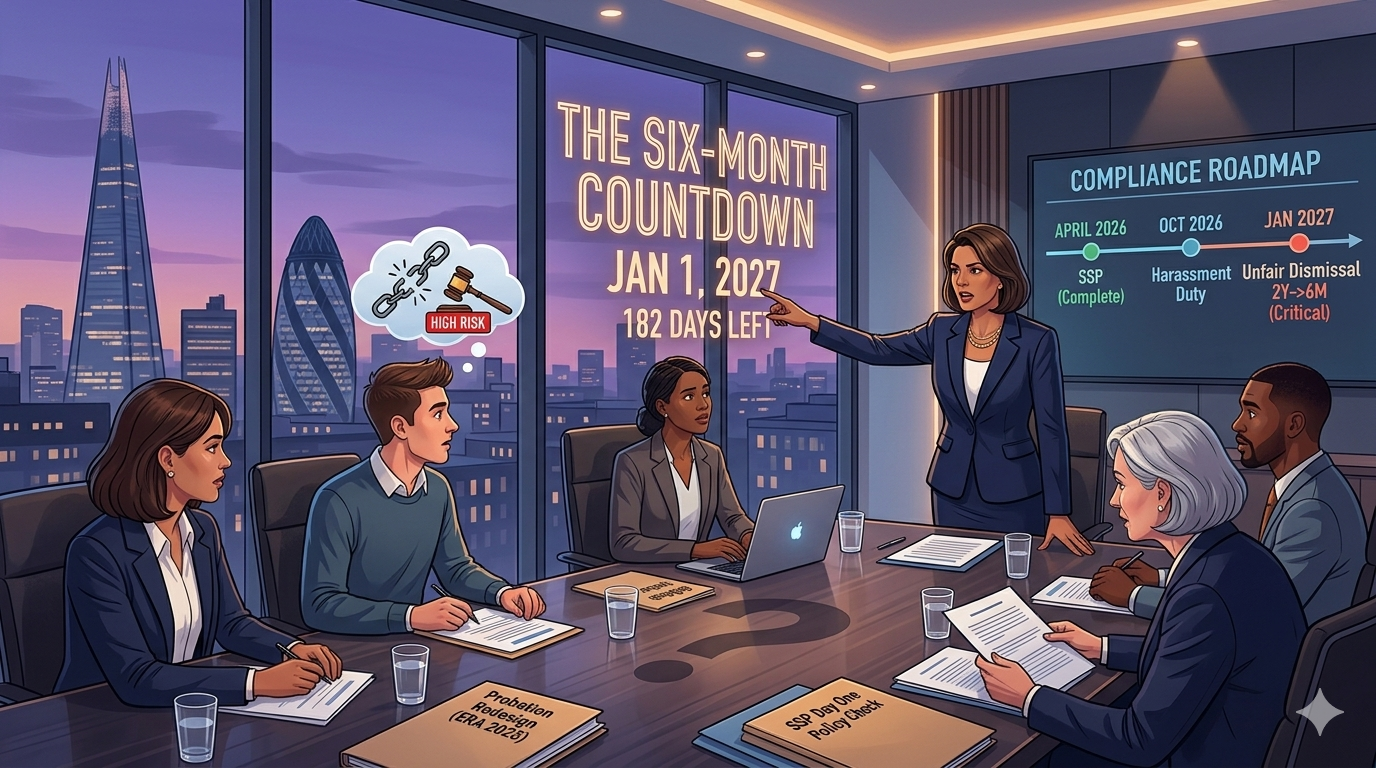
The Employment Rights Act 2025 is already in motion — and most SMEs are running out of time to get ahead of it. Here is what is changing, when, and what you need to do before it is too late.
It Is Already Happening
On 18 December 2025, the Employment Rights Act 2025 received Royal Assent. For UK businesses, that was not an end point — it was the starting gun.
The Act introduces 28 separate reforms to employment law, rolling out in phases through 2026 and into 2027. Some have already taken effect. Others are weeks or months away. A significant number will reshape the day-to-day reality of hiring, managing, and retaining people in ways that many business owners are not yet prepared for.
This is not a warning about something on the horizon. It is already here.
What Has Already Changed (April 2026)
From 6 April 2026, two changes took immediate effect:
Statutory Sick Pay from Day One: The three-day waiting period for SSP has been removed. Employees are now entitled to SSP from the first day of sickness absence, regardless of earnings.
The Fair Work Agency launched: A new single enforcement body combining HMRC’s national minimum wage team, employment agency enforcement, and holiday pay enforcement. It has real teeth — including the power to bring tribunal claims on behalf of workers.
If your absence policies, sick pay documentation, or payroll processes have not been updated to reflect the Day One SSP change, you are already non-compliant.
What Is Coming in January 2027
The headline reform — and arguably the most significant for SMEs — is the reduction of the unfair dismissal qualifying period from two years to six months, taking effect on 1 January 2027.
Currently, employees must have two years’ service before they can bring a standard unfair dismissal claim. From January 2027, that threshold drops to six months. The compensation cap is also being removed, meaning successful claims could result in significantly higher payouts.
The implication for hiring and probation management cannot be overstated. Every new employee you bring on board now is six months away from full employment protection. Your probation processes, performance documentation, and manager training all need to reflect that reality before the end of 2026.
And There Is More in October 2026
October 2026 brings a further wave of reforms:
- Strengthened rules around fire and rehire
- Extended tribunal limitation periods
- New duty to prevent sexual harassment — extended to third-party harassment and requiring employers to take ‘all reasonable steps’
- Strengthened trade union rights, including a right of access to workplaces
Each of these requires policy updates, manager briefings, and in many cases, new or revised employment contracts.
Why SMEs Are Most at Risk
Large employers with in-house HR teams and legal counsel are already adapting. Many have been preparing since 2025.
SMEs — particularly those without dedicated HR support — are significantly behind. A 2025 Brightmine study found that only one in five employers had reviewed or updated their probation policies in anticipation of these changes.
The cost of inaction is not just reputational. It is financial. Unfair dismissal claims post-January 2027 could be uncapped. A single poorly-handled exit could cost more than a year’s HR support.
Where to Start
- Audit your current employment contracts and policies against the new legislation
- Update your SSP and absence management processes immediately if not already done
- Redesign your probation framework with structured reviews and documentation before Day 182
- Brief your managers on the new landscape — what they say, document, and decide now matters more than ever
- Access up-to-date templates and compliance resources so you are not starting from scratch
Not sure where to start? Insightful Hub gives you instant access to ERA 2025-compliant HR templates, policies, and expert video guides — plus a free community to help you navigate every change. Join today at insightfulhub.co.uk.
Ready to Transform Your HR Strategy?
Get expert guidance from our Fractional HR Directors to solve your people challenges and drive business growth.