
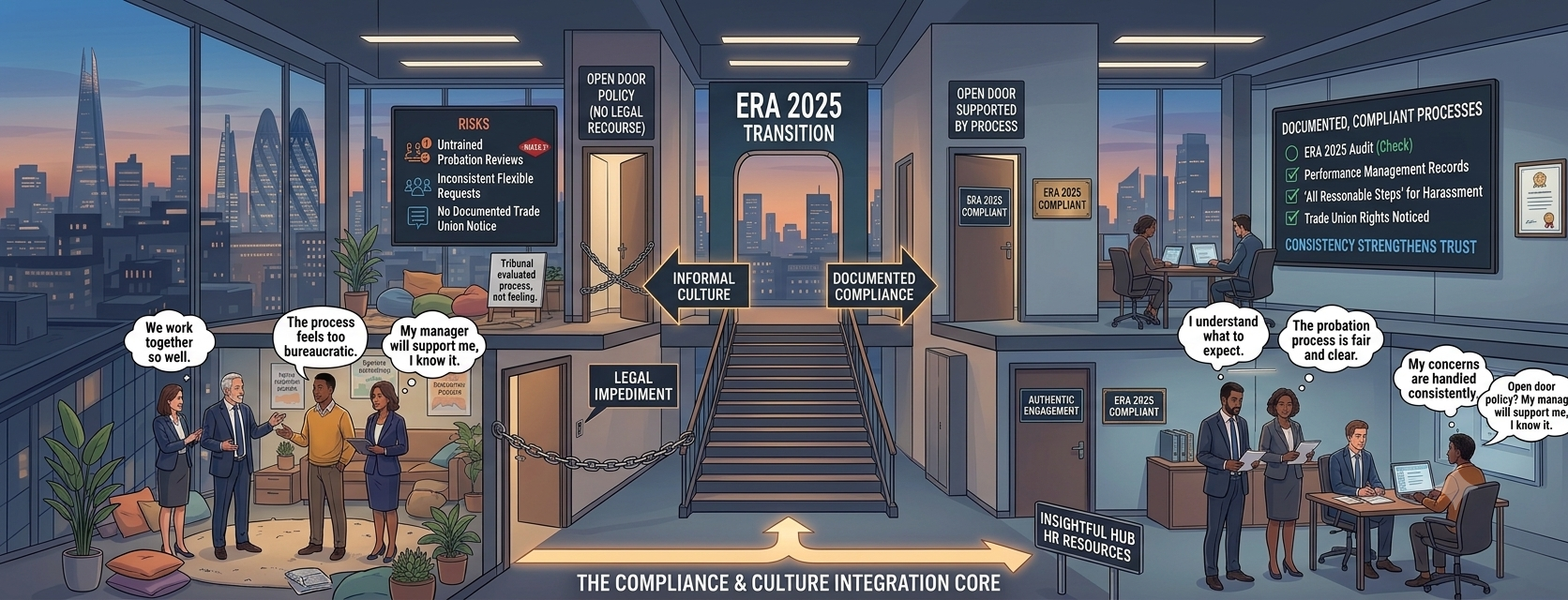
Many business leaders have operated on the assumption that a good culture is a kind of informal insurance against HR problems. The Employment Rights Act 2025 exposes that assumption for what it is. Culture matters — but it does not substitute for documented, compliant processes.
The Culture Comfort Blanket
There is a version of business leadership that believes a positive, people-first culture makes formal HR processes unnecessary. The thinking goes: if everyone likes working here, if we treat people well, if we are flexible and human — we do not need to worry about employment law.
It is an understandable position. And there is truth in it: strong cultures do reduce HR problems. They lower turnover, reduce conflict, and make difficult conversations easier.
But they do not make you legally compliant. And the Employment Rights Act 2025 is raising the compliance bar significantly.
Where Culture Ends and Compliance Begins
Culture governs how people feel about working in your organisation. Compliance governs whether you have met your legal obligations.
These are related but distinct. A business can have a wonderful culture and still be non-compliant — because the probation process has not been updated, because the SSP policy is still referencing three waiting days, because nobody has issued a written statement of trade union rights to new starters.
An employment tribunal does not evaluate culture. It evaluates process, documentation, and legal adherence.
What the ERA 2025 Requires Beyond Good Intentions
Harassment Prevention
From October 2026, employers must take “all reasonable steps” to prevent sexual harassment — including from third parties. This means a written policy is not enough. You need training records, evidence of management action, and a clear complaints process. Good culture alone will not satisfy the legal test.
Dismissal and Performance Management
From January 2027, employees with six months’ service can claim unfair dismissal. A manager who genuinely likes a team member but has not documented performance concerns, has not run formal probation reviews, and has not followed a clear process will leave the business entirely exposed — regardless of intent.
Trade Union Rights
The new obligations to inform employees of their trade union rights at the point of hire require a documented process, not just a positive attitude toward employee voice.
Building Culture and Compliance Together
The good news is that genuine compliance does not undermine culture. In fact, when done well, it strengthens it.
When employees see that probation reviews are fair, structured, and clearly explained, they trust the process. When they see that concerns about harassment are taken seriously and handled consistently, they trust the organisation. When they understand their rights and see that the business operates transparently, engagement and retention improve.
Compliance is not the enemy of culture. Poor compliance is.
Three Steps to Start With
Document your processes clearly — employees who understand what to expect are more secure and more engaged.
Train your managers to be consistent — inconsistency breeds resentment, even in high-culture environments.
Use the ERA 2025 as a prompt for a culture conversation as well as a compliance audit — the two should inform each other.
Ready to Transform Your HR Strategy?
Get expert guidance from our Fractional HR Directors to solve your people challenges and drive business growth.